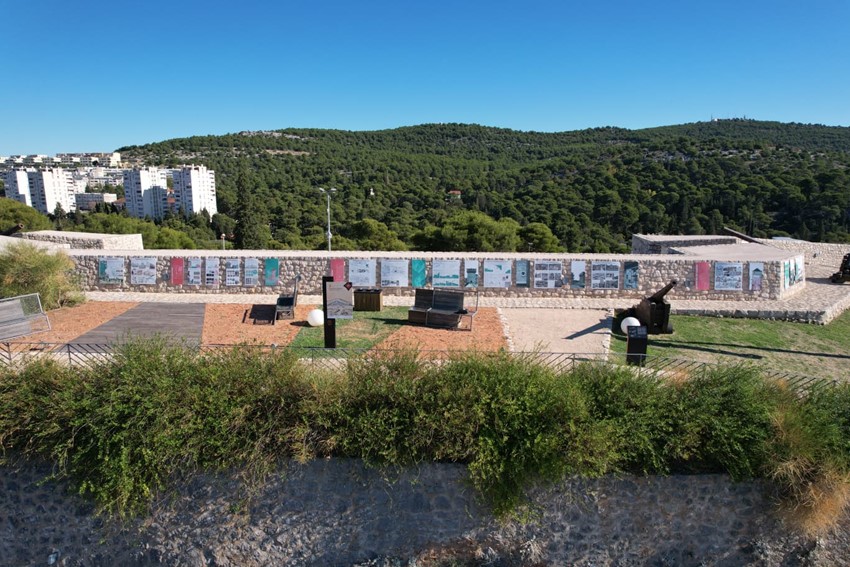
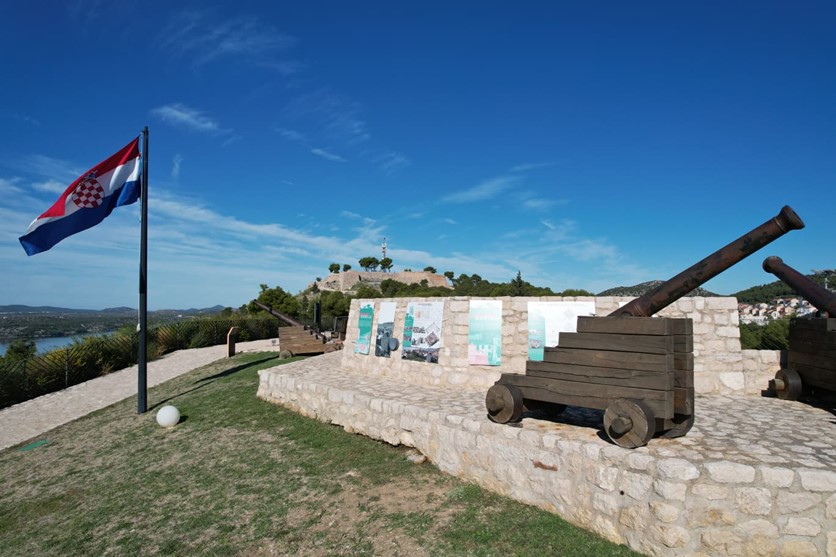
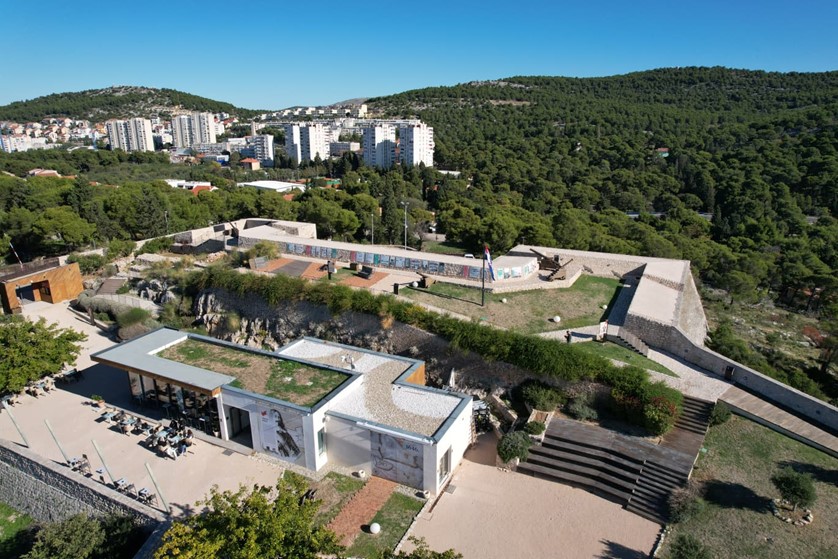
The international exhibition Marks on the Frontier: Settlements and Landscape of Venetian Dalmatia is on display at Barone Fortress. Through exhibition panels, historical documentation, and three-dimensional models, it presents the results of research into fortified settlements in central Dalmatia, covering a wider area stretching from Split to Zadar.
Along the central Dalmatian coast, numerous settlements can still be found that were shaped during the 15th, 16th, and 17th centuries, at a time of Ottoman threats and prolonged conflicts along the borders between the territories of the Republic of Venice and the Ottoman Empire. Defensive walls, towers, and fortified complexes were built to protect the local population, while settlements developed distinctive spatial layouts adapted to defensive needs. Among these settlements are Pirovac, Vodice, Turanj, Marina, Seget, and the Kaštela settlements between Trogir and Split.
Unlike large and well-known urban fortifications, these smaller historic defensive structures are often difficult to recognize today. These settlements have continued to be inhabited and develop over time, with their historic structures gradually altered, extended, and incorporated into modern buildings. As a result, parts of former defensive walls and towers have been preserved within present-day houses, while others have disappeared or are at risk of disappearing due to intensive construction activity. Researching, documenting, and reconstructing their historical appearance is therefore particularly important for understanding and preserving the historic character of this part of Dalmatia’s architectural heritage.
The exhibition presents the results of the international research project Venetian Borderscapes – Digital Documentation for the Study of Settlement Patterns in the Fortified Landscapes of Central Dalmatia, involving the Department of Architecture at the University of Florence, the Institute of Art History, and Šibenik Fortress of Culture, with the support of the SMS Porta Palio Association from Verona. The project is co-funded by the Veneto Region, while the exhibition was also organized as part of the Institute of Art History’s project LoRegUm – From Local to Regional: Art of Adriatic Croatia from the Middle Ages to the 19th Century, funded by the European Union through the NextGenerationEU programme.
On behalf of Šibenik Fortress of Culture, Josip Pavić and Dr. Karla Papeš from the Department of Heritage Research and Interpretation contributed to the preparation of the exhibition. They were also involved in its installation, alongside Andrija Nakić from the same department and colleagues from the Department of Technical Affairs, Maintenance and Protection.
The exhibition panels feature historical information, architectural drawings, photographs, and the results of architectural research, demonstrating how modern technologies can contribute to the study, understanding, and preservation of architectural heritage. A particular highlight of the exhibition is its three-dimensional models and digital reconstructions, which allow visitors to identify historical structures that are now often hidden within modern settlements and gain an insight into what these settlements once looked like.